
Composite veneers vs porcelain veneers: a guide for dentists

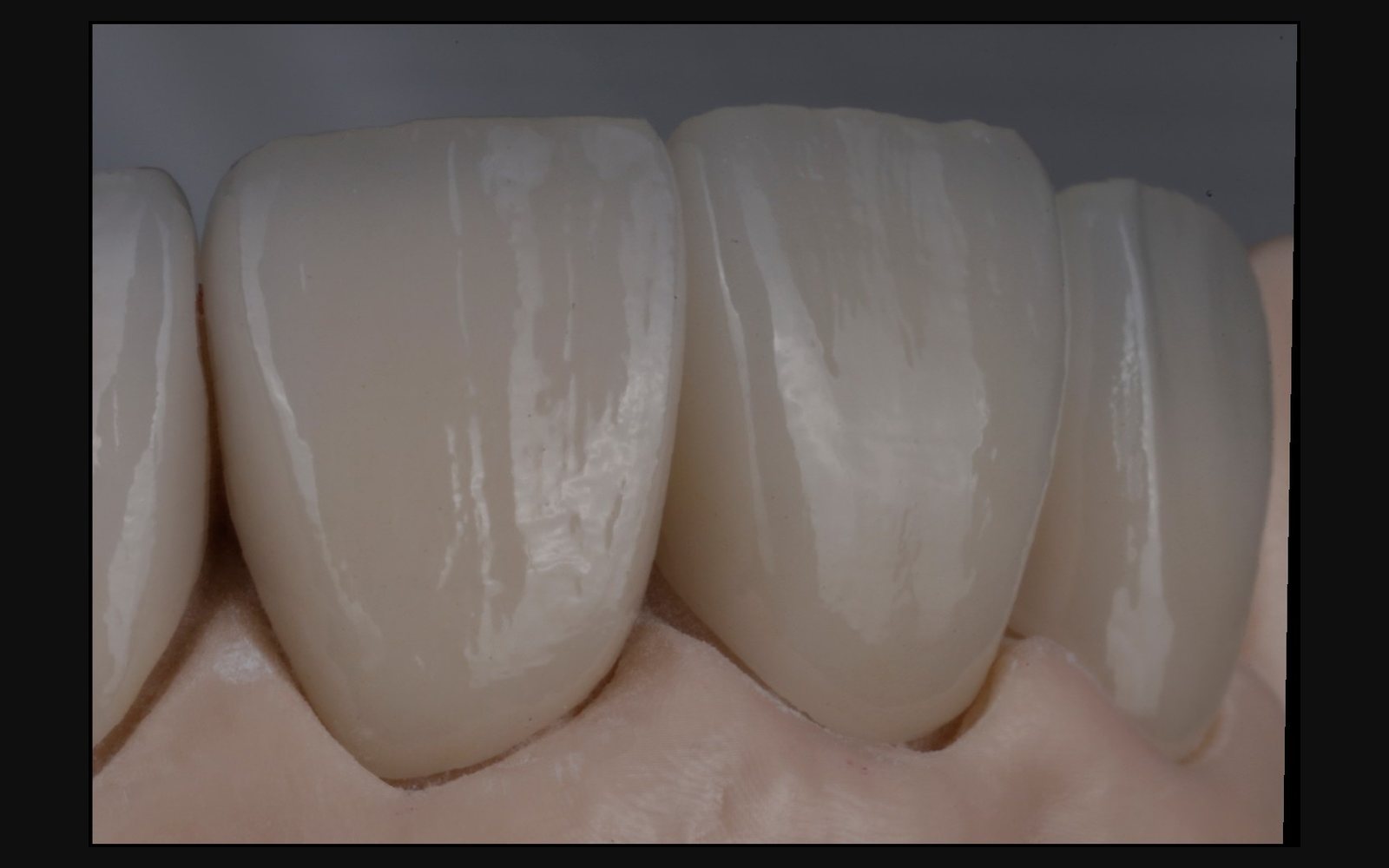


Composite and porcelain veneers can both transform a smile. Neither is always better. The right choice depends on what the patient wants, what their teeth and bite allow, and how they feel about cost and maintenance. This guide sets out the main differences and the questions that help you decide.
This article is general education for dental professionals, not advice about any individual patient.
Composite veneers: the advantages
- They are often largely additive, with little or no tooth reduction, which keeps future options open.
- Direct composite veneers can usually be completed in a single visit, without a laboratory.
- They are easy to adjust, repair and add to over time.
- The fee is usually lower than for porcelain veneers.
Composite veneers: the limitations
- Composite can lose its polish and pick up surface staining over time, so patients need regular maintenance and occasional repolishing.
- Results depend heavily on the clinician’s skill with isolation, shade and layering.
- Very dark or heavily discoloured teeth can be harder to mask with composite alone.
- Multiple veneers take considerable chair time for the clinician.
Porcelain veneers: the advantages
- Porcelain keeps its colour and surface polish very well over time.
- Once bonded, ceramic is strong and wear resistant.
- With the right material and preparation, porcelain can mask discolouration effectively.
- Laboratory fabrication makes larger, multi-unit cases very predictable in shape and colour.
Porcelain veneers: the limitations
- Most porcelain veneers need some tooth preparation, although minimal-preparation approaches are often possible with good planning.
- Treatment usually needs several visits, provisional restorations and laboratory costs.
- A chipped porcelain veneer is harder to repair and may need replacing.
- The fee is higher.
Case selection: questions to ask
- What does the patient actually want to change: colour, shape, alignment, or all three?
- How discoloured are the teeth, and would whitening first help?
- Could alignment with aligners reduce or avoid tooth preparation?
- What is the occlusion like, and is there evidence of bruxism or tooth wear?
- Are there existing restorations or structural concerns?
- How does the patient feel about cost, maintenance and future repairs?
Plan first: wax-up and mock-up
Whichever material you choose, start with the end result. A diagnostic wax-up and a mock-up let you and the patient see the proposed smile before any treatment, guide whether the case is additive or subtractive, and show you exactly where preparation is needed, if at all. Guided preparation through the mock-up keeps tooth reduction to a minimum.
Explaining the choice to patients
Patients choose well when they understand the trade-offs. Explain how each option is done, how it looks, how long it typically lasts, what maintenance it needs and what happens if something chips or stains. Record the discussion as part of valid consent.
Learning composite and porcelain veneers
Direct composite veneers are taught hands-on on our two-day Totally Composite course. Porcelain veneers, smile design, mock-ups and guided preparation are taught on Totally Aesthetics, our one-year Level 7 diploma. Compare our veneers courses.
Discover Our Dental Courses Today
Expand your dental knowledge with our professional development courses.
Discover Our Latest Blogs
Stay informed with our latest blog posts
Composite veneers vs porcelain veneers: a guide for dentists


Level 7 diploma or MSc in aesthetic dentistry: which is right for you?
How to choose a composite bonding course: a guide for UK dentists


Sign Up to Receive Your Free Course Catalog

