
How to choose a composite bonding course: a guide for UK dentists


Composite bonding is now a routine request in many UK practices. Done well, it is conservative, beautiful and very rewarding. Done without a clear protocol, it can be slow, unpredictable and stressful. That is why so many dentists look for a composite course after qualifying.
But composite courses vary enormously, from short online lectures to year-long programmes. This guide explains what a good composite bonding course should give you, and the questions worth asking before you book.
What a good composite course should give you
Plenty of hands-on time
You learn composite with your hands, not from slides. Look for a course where a large part of the day is spent hands-on, layering real restorations yourself, with experienced faculty walking the room and correcting your technique as you go.
Anterior and posterior skills
Composite bonding and composite veneers get the attention, but posterior composites are what most dentists do every day. Contact points, sectional matrices and good isolation make a huge difference to your daily dentistry, so a good course covers both.
A repeatable protocol
Predictable results come from doing the same steps well every time: isolation, bonding, shade selection, layering, and finishing and polishing. You should leave with a protocol you can follow on your very next patient.
Techniques that are financially viable
This is one of the most overlooked questions. A beautiful result is not much use in practice if it takes so long that you cannot offer it at a fee your patients will accept. Look for a course that teaches efficient techniques you can complete in a realistic appointment time, so your composite dentistry is good for your patients and financially viable for you and your practice.
Independent advice on materials
Every manufacturer has a favourite system. A course that lets you try materials from several companies helps you choose what works for you, rather than what a sponsor prefers.
Teaching from someone who still treats patients
Techniques that work in a lecture theatre do not always work in a busy surgery. Ask whether the people teaching you use these techniques with their own patients, every week.
Planning, consent and fees
Composite bonding is usually elective, so treatment planning, consent and patient communication matter as much as technique. Good courses cover how to plan a case, how to explain options and how to set a fair fee.
CPD
Check that the course is CPD accredited and that you receive a certificate with clear learning outcomes for your records.
Online, one-day or two-day?
Online courses are useful for theory and revision, but nobody can correct your technique over a video call. One-day courses often focus on anterior work only. A two-day hands-on course gives you time to cover anterior and posterior composites properly, and to repeat the key steps until they feel natural.
Questions to ask before you book
- How much of the course is hands-on?
- Will I place a composite veneer, a Class IV and a Class II restoration myself?
- Are the techniques efficient enough to complete in a realistic appointment time?
- How many instructors are there for each group of delegates?
- Which materials will I use, and from how many manufacturers?
- Do the teachers use these techniques with their own patients?
- Is the course CPD accredited?
- Is there any support or community after the course?
Where Totally Composite fits
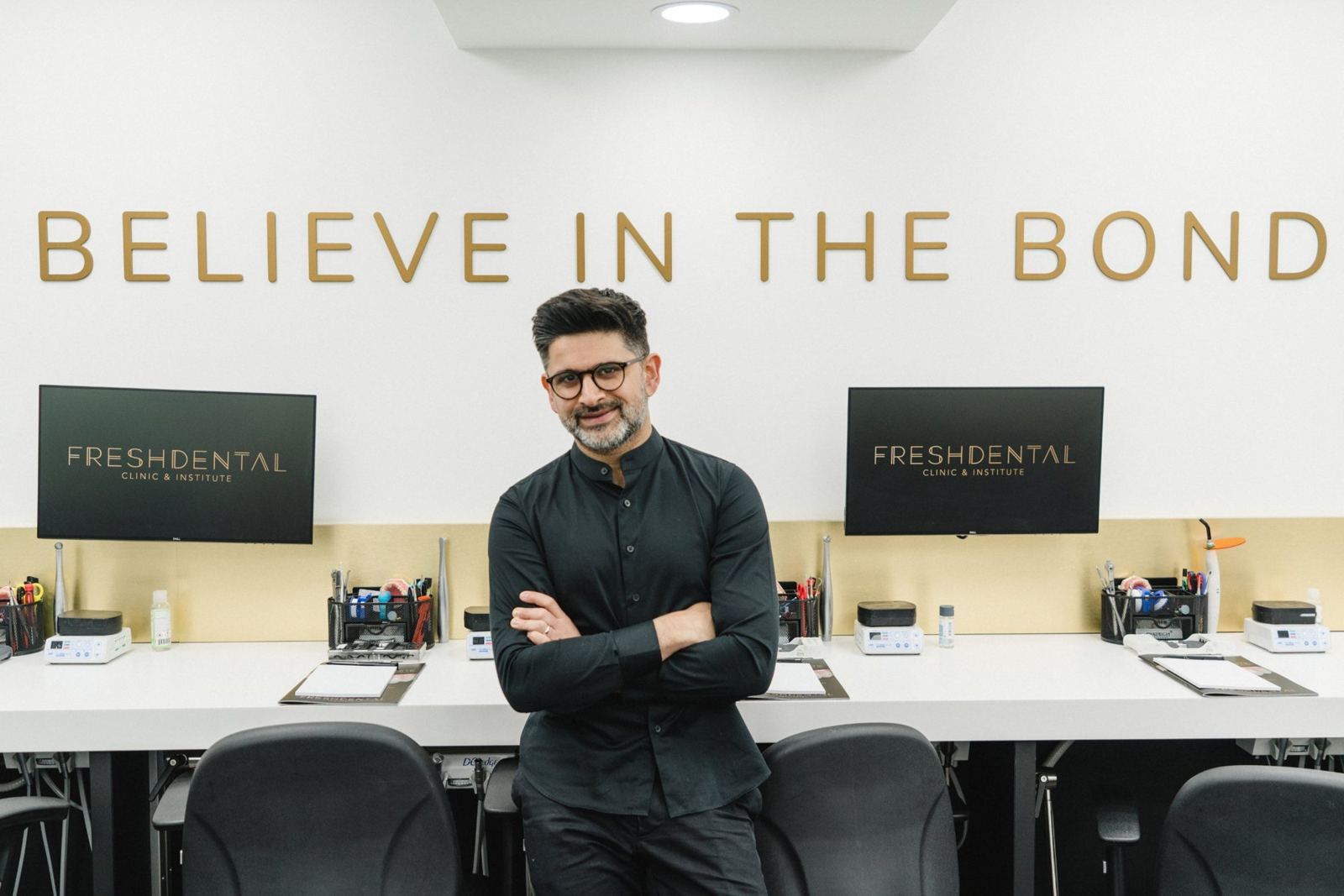
Totally Composite is our two-day, hands-on composite course, taught by Dr Monik Vasant. For ten years it has run 280 times in 14 countries, training more than 6,200 clinicians, including many of the UK’s leading composite dentists.
Every technique is used daily at Freshdental Clinic and is designed to be efficient, so you can deliver it in a realistic appointment time. During the hands-on sessions you complete anterior and posterior isolation, a layered Class IV incisor, a direct composite veneer, a diastema closure, a Class II molar, and finishing and polishing. You also try materials from several manufacturers. The course is CPD accredited and costs £1,495.83 + VAT in London. Find out more about our composite bonding course.
What next after a composite course?
Once your composite skills are in place, many dentists want to plan larger cases: smile design, porcelain veneers, crowns, onlays and full-mouth rehabilitation. That is what our one-year Level 7 diploma in aesthetic and restorative dentistry is built for.
Discover Our Dental Courses Today
Expand your dental knowledge with our professional development courses.
Discover Our Latest Blogs
Stay informed with our latest blog posts
Composite veneers vs porcelain veneers: a guide for dentists

Level 7 diploma or MSc in aesthetic dentistry: which is right for you?
How to choose a composite bonding course: a guide for UK dentists


Sign Up to Receive Your Free Course Catalog

